
For decades, robusta coffee has lived in the shadow of its more popular cousin, arabica. Often dismissed as “inferior” in Western coffee culture, robusta was the unsung hero of instant coffee blends and commercial brews. But today, things are changing. With its bold flavor, higher caffeine content, and undeniable resilience, robusta is experiencing a renaissance—and Vietnam is leading the way.
As the world’s largest exporter of robusta coffee, Vietnam’s role in reshaping perceptions of this once-overlooked variety is undeniable. From the sprawling highlands of Dak Lak to the misty mountains of Lam Dong, Vietnam’s coffee farmers are proving that robusta is more than just a budget-friendly option—it’s a coffee with character, history, and untapped potential.

An aerial view of a coffee plantation in Lam Dong
The Roots of Robusta: A Coffee Built to Endure
The story of robusta coffee begins in the humid lowlands of Africa, where it was first cultivated in the late 19th century. Unlike arabica, which thrives in cooler, high-altitude regions, robusta evolved to survive in challenging conditions. Its natural resistance to pests and diseases, combined with its ability to flourish in hotter climates and lower altitudes, made it an agricultural powerhouse.
By the late 1800s, robusta seeds were making their way across the globe, from Congo to Java, Indonesia. Farmers embraced the crop for its high yield and adaptability, and soon robusta became a staple in tropical coffee-growing regions. Today, robusta accounts for approximately 40% of global coffee production, with Vietnam leading the pack as the top exporter, supplying nearly 40% of the world’s robusta beans.
What Makes Robusta Different?
For the untrained palate, robusta coffee might come across as stronger and harsher than arabica. But to dismiss it as simply “bitter” is to overlook its complexity. Robusta coffee has a personality all its own—a bold, full-bodied flavor profile with earthy undertones and notes of dark chocolate, hazelnut, and caramel. Its higher caffeine content, nearly double that of arabica, gives it a punch that many coffee lovers crave.
But robusta’s distinctiveness goes beyond taste. Its chemical composition tells the story of a coffee built for endurance. With more chlorogenic acid (a natural antioxidant) and fewer lipids and sugars than arabica, robusta is not just resilient in the field—it’s also less prone to oxidation, which means it stays fresh longer. These qualities make it a favorite in blends and an increasingly popular choice in specialty markets where bold flavors are celebrated.
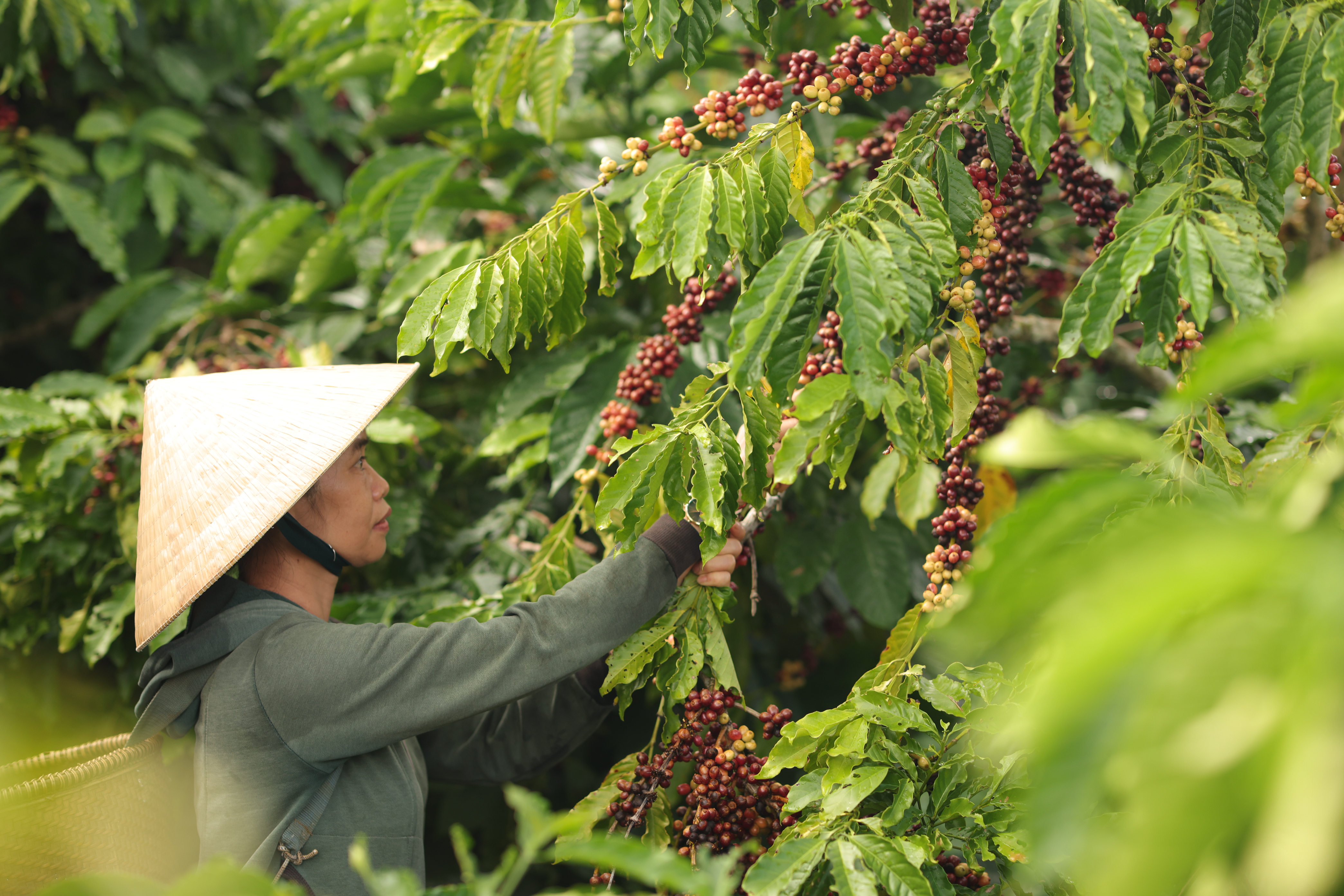
Robusta can be grown in a wider range of climates and altitudes
Vietnam: The Beating Heart of Robusta Coffee
When it comes to robusta coffee, no country has embraced the crop quite like Vietnam. Nestled in Southeast Asia’s tropical belt, Vietnam boasts the perfect conditions for cultivating coffee: fertile volcanic soil, abundant rainfall, and a climate that ranges from temperate to tropical. But it’s the sheer scale of Vietnam’s commitment to robusta that sets it apart.
Dak Lak: The Capital of Vietnamese Coffee
At the heart of Vietnam’s coffee industry lies Dak Lak, a province in the Central Highlands that has earned its title as the “capital of coffee.” Here, coffee isn’t just an agricultural product—it’s a way of life. With over 210,000 hectares dedicated to coffee cultivation, Dak Lak produces more than 520,000 tons of coffee annually, accounting for over 30% of Vietnam’s total output.
The province’s most famous export, Buon Ma Thuot coffee, is a name that resonates with coffee connoisseurs around the globe. Known for its strong, full-bodied flavor, Buon Ma Thuot robusta has won numerous international accolades and certifications, including Fairtrade and Rainforest Alliance. But beyond its economic significance, coffee in Dak Lak carries a cultural weight, serving as a symbol of the region’s resilience and innovation.
Lam Dong: A Hidden Gem
While Dak Lak often steals the spotlight, the province of Lam Dong quietly holds its own as a major player in Vietnam’s robusta production. Known more for its arabica coffee, Lam Dong is also home to 160,000 hectares of robusta plantations, which make up 91% of the province’s coffee acreage.
Lam Dong’s geography is as diverse as its coffee. From the rolling hills of Di Linh to the cooler, higher-altitude areas near Da Lat, the province offers a wide range of microclimates that influence the flavor profiles of its coffee. Di Linh, in particular, stands out as the largest producer in the region, with fertile basalt soil and a temperate climate that gives its robusta beans a unique, nuanced character.
A Coffee Built for the Future
Robusta’s rise in popularity isn’t just a product of its taste or resilience—it’s also a reflection of the changing dynamics of the global coffee market. As consumers become more conscious of sustainability and ethical sourcing, robusta has emerged as a more eco-friendly option. Its natural resistance to pests means fewer chemicals are needed during cultivation, and its ability to grow in diverse climates reduces the strain on already-stressed ecosystems.
Vietnam has been quick to capitalize on these advantages. Many of the country’s robusta producers have adopted sustainable farming practices, earning certifications like VietGAP and HACCP that ensure both quality and environmental responsibility. By prioritizing sustainability, Vietnam is not only meeting global demand but also setting a standard for the future of coffee production.
From Tree to Cup: The Art of Quality Control
For Vietnam’s robusta coffee to shine on the global stage, quality control is key. The journey from tree to cup is meticulously managed, with each step designed to preserve the beans’ unique characteristics.
Grading and Sorting
At the heart of this process is the grading of green beans. Size, density, moisture content, and physical appearance are carefully evaluated to ensure consistency. Beans with a moisture level of 10-12% and minimal defects are considered the gold standard, often meeting international certifications like ISO 9001:2015.
Cupping: The Final Test
Before robusta beans make their way to consumers, they undergo a rigorous cupping process. In a controlled environment, trained Q-graders and coffee tasters assess the beans’ aroma, flavor, body, and aftertaste. This final step ensures that only the best beans—those that capture the essence of Vietnam’s robusta—are sent to market.
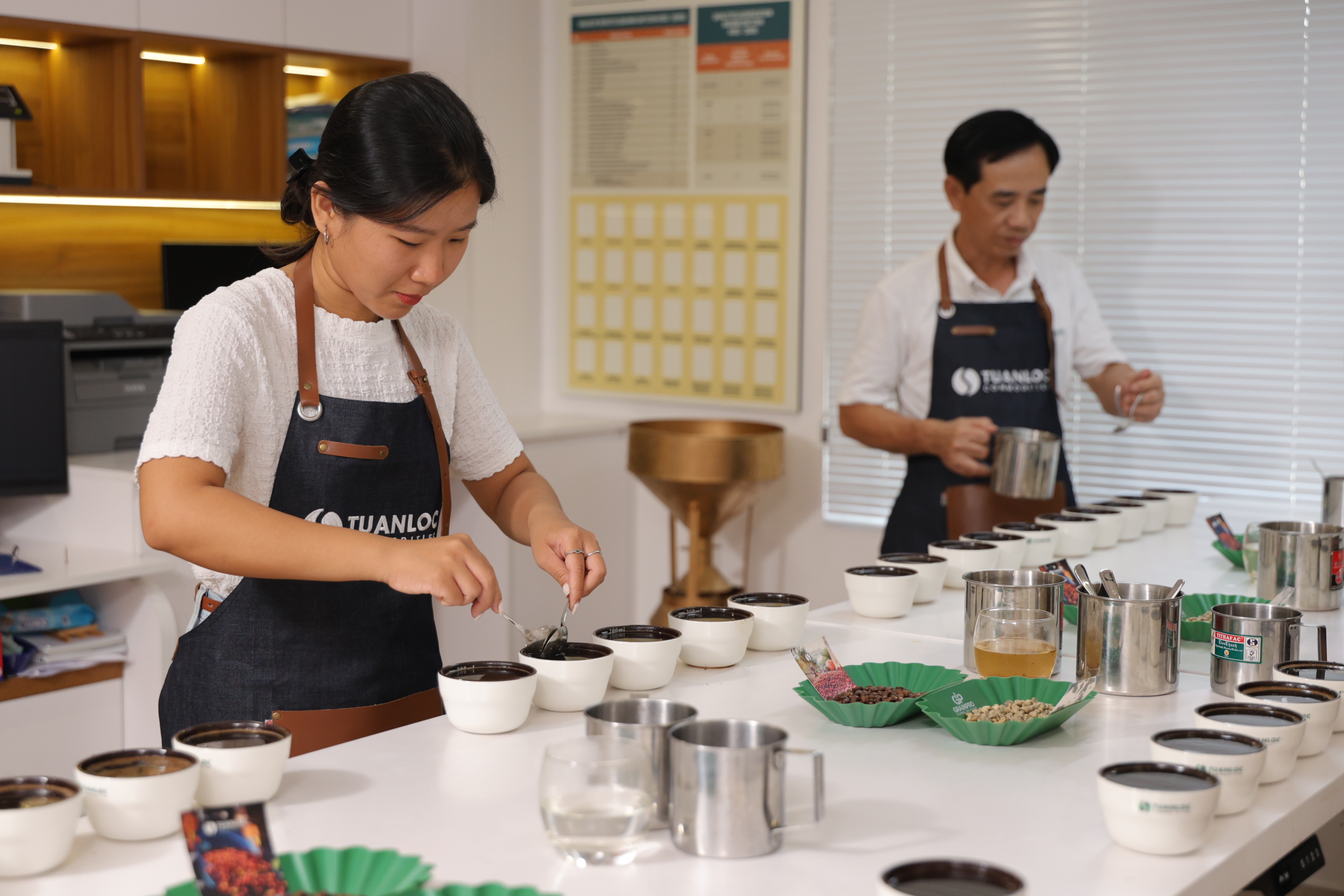
A cupping session to evaluate the coffee quality
The Global Stage: Robusta’s Growing Influence
The robusta coffee market is booming, with projections estimating its value will reach $28.73 billion by 2023. Much of this growth is driven by rising demand in developing countries and the increasing popularity of bold, full-bodied coffee in specialty markets.
But robusta’s appeal isn’t just about economics. With its high caffeine content and antioxidant properties, robusta is also gaining attention for its potential health benefits, from improved focus to reduced inflammation. For consumers seeking a brew that’s as strong as it is flavorful, robusta is quickly becoming the coffee of choice.
Conclusion: A Coffee Worth Celebrating
Robusta coffee’s journey from obscurity to prominence is a testament to its unique qualities and the dedication of the farmers who cultivate it. In Vietnam, robusta is more than just a crop—it’s a source of pride, a driver of economic growth, and a symbol of resilience.
As the world wakes up to the potential of robusta coffee, Vietnam is poised to remain at the forefront of this exciting transformation. From the rich volcanic soils of Dak Lak to the temperate highlands of Lam Dong, Vietnam’s robusta coffee is a bold, flavorful reminder that sometimes, the underdog deserves a second look.
So, the next time you sip a cup of robusta, take a moment to appreciate the journey it took to reach you—from the lush highlands of Vietnam to your table. It’s a story of resilience, innovation, and, above all, exceptional coffee.
——————–
Tuan Loc Commodities
Your Go-To Partner for Green Coffee from Vietnam
Website: https://tlcommodities.com/
Hotline/whatsapp: +84 333 908 799
Email: coffee@tlcommodities.com
Linkedin: https://www.linkedin.com/company/tuan-loc-commodities/


